Trinetra Wireless, a provider of GPS fleet management, IoT telematics, and AI-powered fleet intelligence solutions, highlights the growing importance of driver safety analytics as transportation companies move from reactive safety management toward predictive risk prevention.
As fleet operators across logistics, education transport, construction, and industrial sectors manage increasingly complex operations, safety data is becoming an important operational intelligence resource. Organizations are using telematics, driver behavior analytics, and connected vehicle data to identify risks earlier, improve accountability, and strengthen transportation safety programs.
About the Development
The transportation industry is experiencing a shift in how organizations approach fleet safety.
Historically, safety programs depended heavily on accident investigations, manual reporting, and periodic driver training. While these methods remain valuable, they provide limited visibility into the daily behaviors and operational patterns that contribute to risk.
Driver safety analytics introduces a more proactive model.
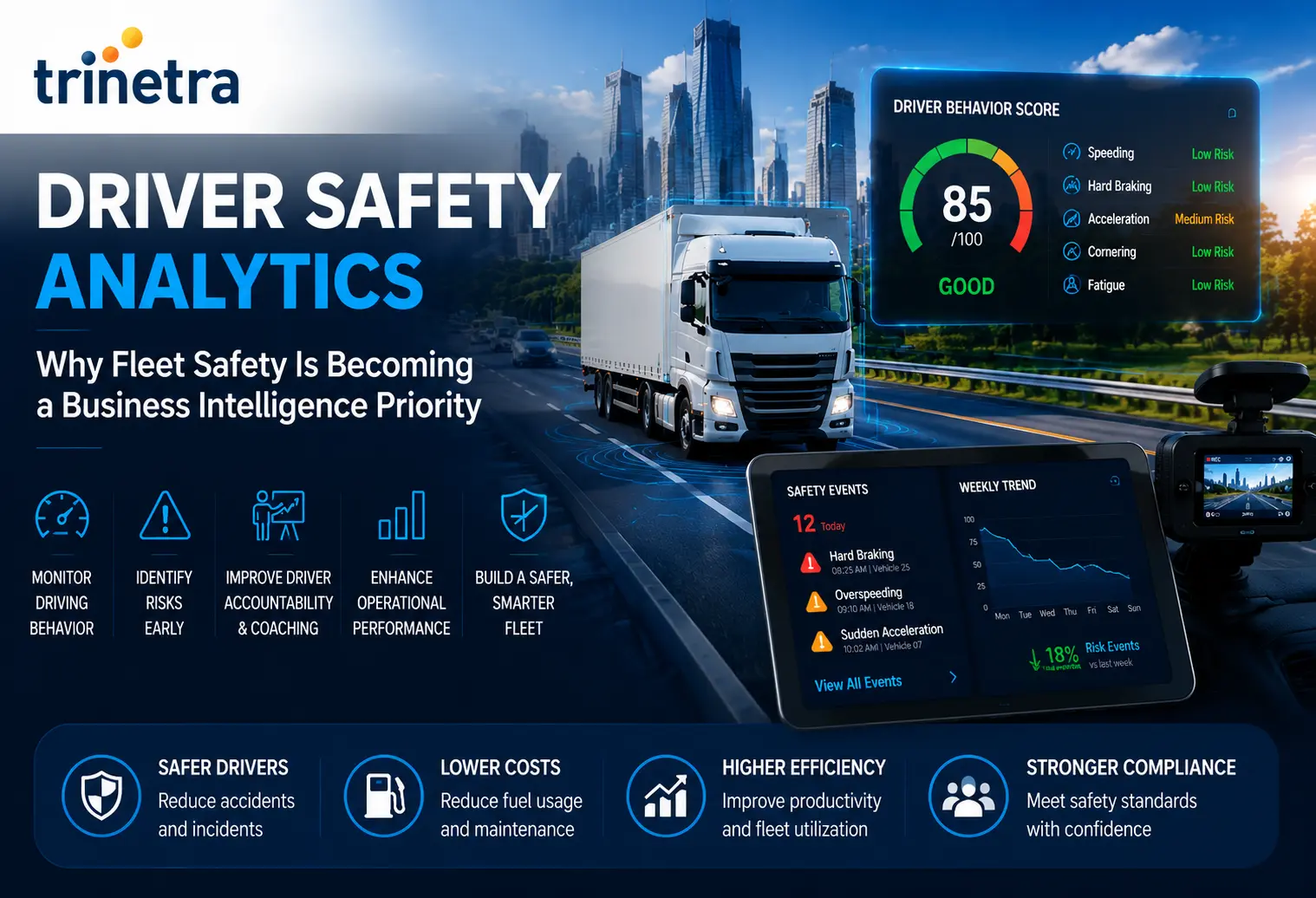
By analyzing vehicle movement, driving behavior, route patterns, and operational events, fleet leaders can better understand risk factors such as:
- Excessive speeding
- Harsh braking
- Aggressive acceleration
- Route deviations
- Unsafe driving patterns
- Vehicle misuse
For organizations managing distributed fleets, this creates a continuous safety intelligence layer rather than relying only on post-incident reviews.
Why This Matters for the Transportation Industry
Fleet safety is increasingly connected with broader business outcomes.
Unsafe driving behavior does not only create safety risks. It can also influence:
- Fuel consumption
- Vehicle maintenance costs
- Asset availability
- Delivery reliability
- Customer experience
- Operational efficiency
This has changed the role of safety data.
Fleet operators are beginning to view safety analytics as part of business performance management rather than only a compliance function.
For logistics companies, this means better operational predictability.
For schools and institutional transport operators, it means stronger visibility and accountability.
For construction and infrastructure organizations, it means improved control over vehicles and mobile assets operating across multiple locations.
Key Highlights
Driver safety analytics enables organizations to:
- Monitor driving behavior through connected vehicle data
- Identify high-risk driving patterns before incidents occur
- Support evidence-based driver coaching programs
- Improve safety accountability across fleet operations
- Combine vehicle data and video insights for better incident analysis
- Create measurable safety performance indicators
The integration of IoT telematics, analytics dashboards, and video intelligence is helping businesses build more transparent transportation operations.
Industry Context: The Move Toward Predictive Fleet Safety
Transportation organizations are under increasing pressure to improve safety while controlling operational costs.
Fleet complexity has increased due to:
- Multi-location operations
- Rising fuel expenses
- Driver availability challenges
- Higher customer expectations
- Increased compliance requirements
At the same time, connected vehicle technologies have created access to large volumes of operational data.
The next stage of fleet management is not simply collecting information. It is converting that information into decisions.
This is where AI-powered analytics and intelligent fleet platforms are becoming increasingly relevant.
About Trinetra Wireless
Trinetra Wireless provides AI-powered fleet intelligence, GPS tracking, IoT telematics, and transportation technology solutions designed to help organizations improve fleet visibility, safety, and operational efficiency.
The platform supports businesses across industries including logistics, school transportation, construction, infrastructure, healthcare, commercial fleets, and enterprise mobility operations.
Its capabilities include real-time fleet monitoring, driver behavior analytics, route monitoring, fuel insights, maintenance alerts, dashboards, reporting, video telematics, and enterprise integrations.