

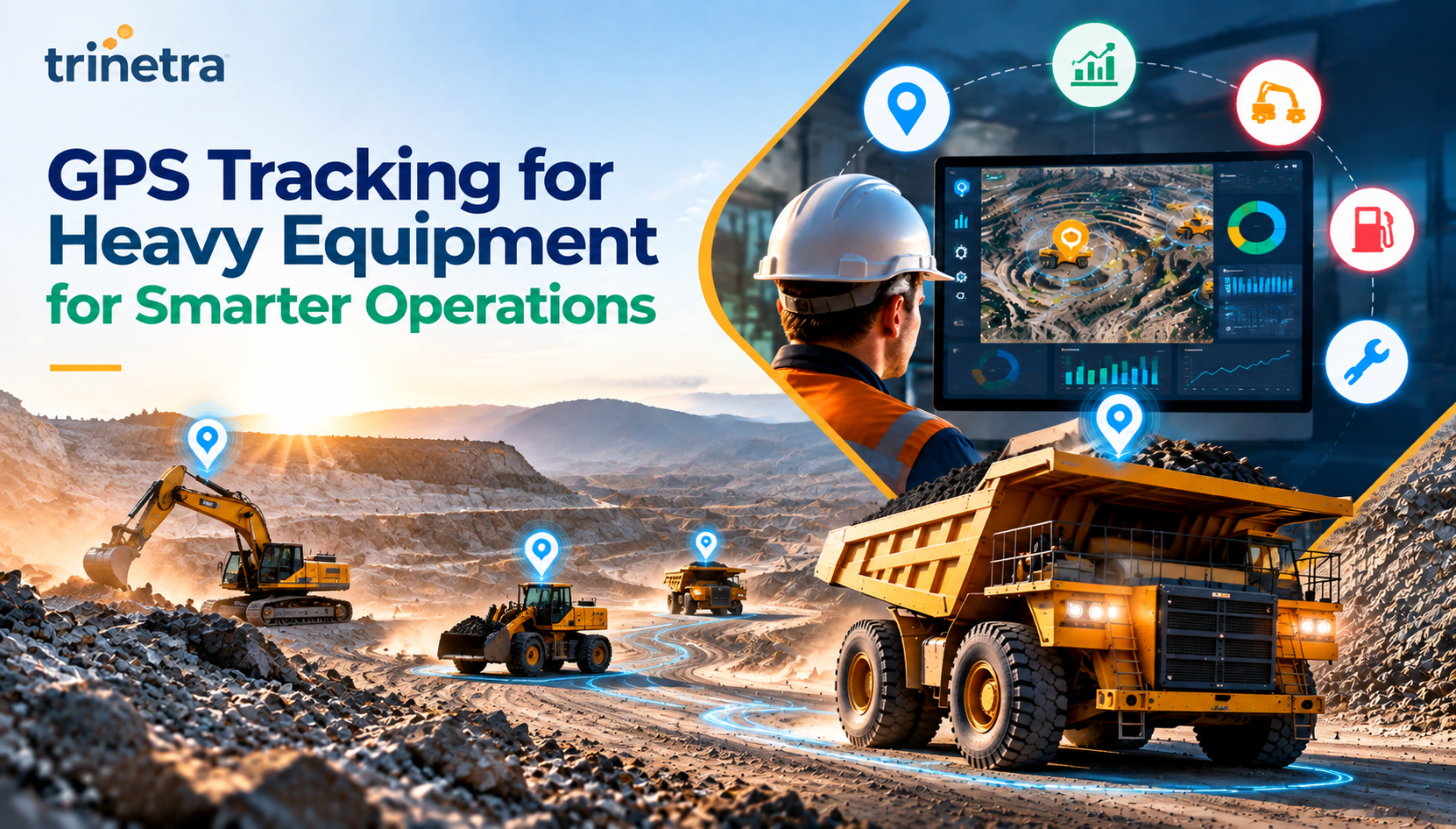
IoT-Powered GPS Tracking for Construction, Mining & Industrial Equipment
Managing excavators, bulldozers, loaders, cranes, dump trucks, graders, pavers, compactors, forklifts, and other heavy equipment across multiple locations requires more than manual supervision. Fleet and equipment managers need visibility into asset location, utilization, operating hours, fuel usage, maintenance requirements, and unauthorized movement. Trinetra Wireless GPS Tracking for Heavy Equipment combines GPS tracking, geofencing, telematics, alerts, maintenance monitoring, dashboards, and analytics to help businesses improve equipment control, reduce operational inefficiencies, and make data-driven decisions.
Schedule a Heavy Equipment Tracking Demo
Key Challenges Faced by Heavy Equipment Fleet Businesses
Heavy equipment often operates across large construction sites, mining areas, infrastructure projects, and industrial locations. Without connected tracking and fleet intelligence, businesses can face asset visibility gaps, unnecessary fuel usage, maintenance delays, and equipment downtime.
- Limited Equipment Visibility
Tracking multiple heavy assets across different sites can be difficult without real-time location visibility, increasing the risk of misplaced equipment and operational blind spots. - Unauthorized Equipment Movement
Equipment operating outside approved project areas or operating zones can create security, accountability, and asset-control challenges. - High Fuel Consumption
Fuel is a significant operating expense for heavy equipment. Excessive idling and inefficient equipment usage can make fuel costs harder to control. - Unexpected Maintenance & Downtime
Missed servicing and reactive maintenance can result in equipment breakdowns, costly repairs, and interruptions to project schedules. - Low Equipment Utilization
Without accurate operating-hour and activity data, managers may struggle to identify idle machinery or optimize equipment allocation. - Safety & Compliance Challenges
Heavy equipment operations require consistent monitoring of operator activity, safety events, and operational records to support safer working environments and compliance processes.
How GPS Tracking for Heavy Equipment Works
Trinetra connects heavy equipment with GPS and telematics technology to capture operational data and turn it into real-time visibility, alerts, reports, and actionable fleet intelligence.
- Step 1:
Equipment data collection - Step 2:
Real-time asset tracking - Step 3:
Site mapping & geofencing - Step 4:
Equipment monitoring - Step 5:
Alerts & validation - Step 6:
Analytics & optimization
Explore GPS Tracking Solutions
Smart Features & Solution Capabilities
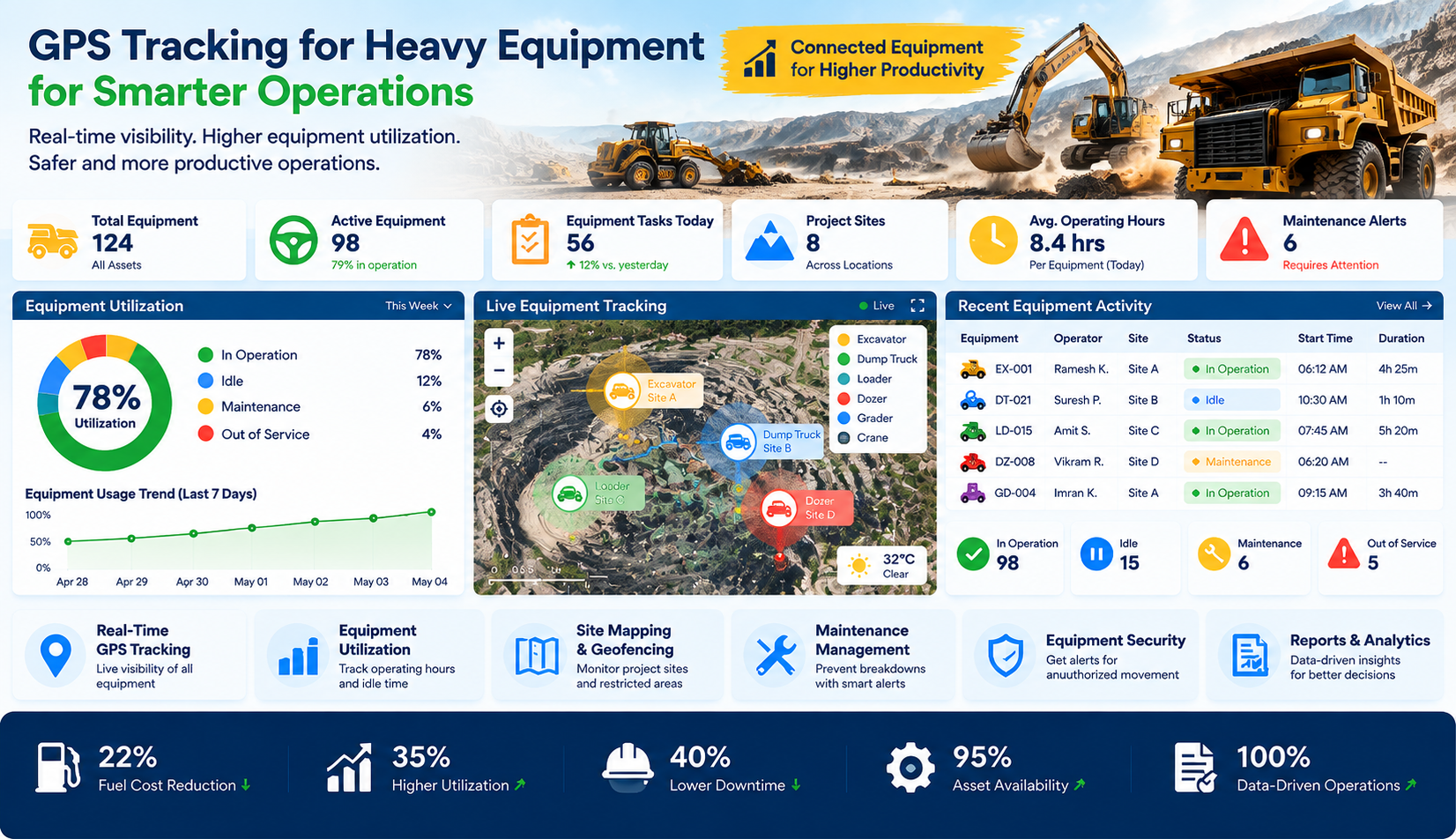
Trinetra’s current heavy-equipment solution includes real-time tracking, geofencing, maintenance alerts, fuel monitoring, operational analytics, and safety/compliance capabilities. Its broader fleet platform adds digital mapping, enhanced security, extensive reports, and graphical dashboards.
- Real-Time Heavy Equipment GPS Tracking
Monitor the current location and movement of heavy equipment to improve visibility and control across distributed sites. - Digital Mapping & Geofencing
Define work zones, restricted areas, landmarks, and project boundaries while receiving alerts when equipment enters or exits configured zones. - Equipment Utilization Monitoring
Review operating hours, idle periods, movement history, and equipment activity to identify utilization gaps and improve asset allocation. - Maintenance Alerts & Service Planning
Schedule maintenance notifications based on configured time, distance, or engine-hour parameters to support timely servicing - Fuel Monitoring
Track supported fuel-consumption data and identify usage patterns that may indicate operational inefficiencies. - Equipment Security & Exception Alerts
Monitor unauthorized movement and other configured exceptions to strengthen control over valuable mobile assets. - Reports & Graphical Dashboards
Access equipment location, usage, idle-time, violation, maintenance, and performance information through reports and summarized dashboards.
Key Benefits of Heavy Equipment GPS Tracking
Improve Asset Visibility
Track equipment locations and movement in real time across construction sites, mining operations, infrastructure projects, and other distributed locations.
Increase Equipment Utilization
Compare operating activity and idle periods to identify underused assets and make better equipment allocation decisions.
Control Fuel Usage
Use fuel and operating data to identify excessive idling and inefficient equipment usage patterns.
Reduce Equipment Downtime
Maintenance reminders and usage-based insights support proactive servicing and help teams manage maintenance schedules more systematically.
Strengthen Asset Security
Geofencing and movement alerts provide greater visibility into unauthorized equipment movement and help teams respond to exceptions faster.
Improve Operational Decision-Making
Use historical equipment data, reports, dashboards, and performance metrics to identify inefficiencies and improve fleet planning.
Industries / Sectors That Benefit from Heavy Equipment GPS Tracking
Connected Equipment Intelligence for Asset-Intensive Operations
- Construction & Infrastructure
Track excavators, loaders, dump trucks, cranes, and other equipment across project sites. - Mining Operations
Monitor heavy equipment operating across large mine areas and improve asset visibility and utilization. - Road & Paving Projects
Track graders, asphalt pavers, compactors, and supporting equipment during infrastructure work. - Industrial & Material Handling Operations
Improve visibility of forklifts, loaders, and other mobile equipment used for internal material movement. - Heavy Equipment Contractors
Monitor equipment deployed across multiple projects and locations to improve utilization and accountability. - Multi-Site Project Operations
Centralize visibility across equipment operating at different project sites, branches, or operational areas.
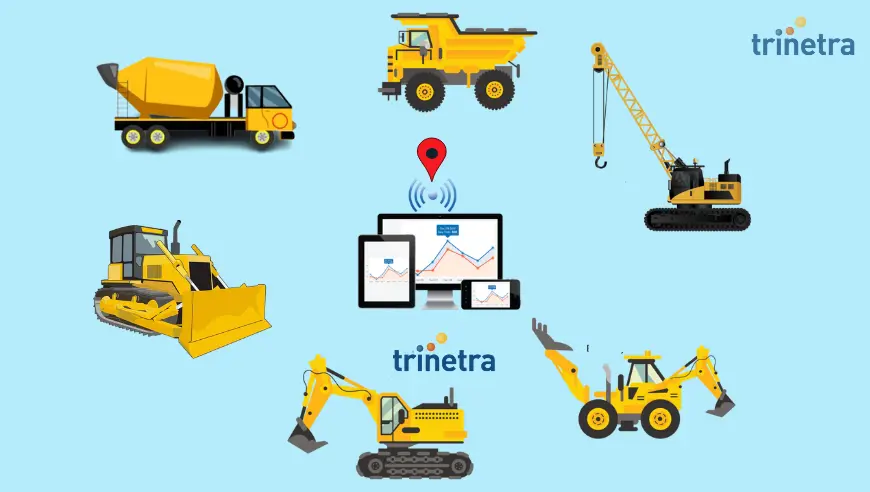
Trinetra’s current heavy-equipment page specifically identifies construction and mining as core use cases and lists equipment such as excavators, bulldozers, backhoes, loaders, cranes, dump trucks, graders, asphalt pavers, compactors, and forklifts.
From Manual Equipment Management to Smart Fleet Operations
Connected GPS and telematics help heavy-equipment businesses move from manual
Why Choose Trinetra Wireless for GPS Tracking for Heavy Equipment?
Trinetra Wireless combines GPS hardware, fleet management software, IoT telematics, alerts, dashboards, reports, and analytics into an integrated fleet technology ecosystem. Its heavy-equipment solution is designed around visibility, utilization, maintenance, fuel monitoring, security, and operational control
Key strengths include:
- Integrated GPS Hardware & Software
Trinetra provides an integrated hardware-and-software approach for connected fleet management. - Real-Time Equipment Visibility
Monitor the location and movement of heavy equipment through GPS-based tracking. - Broad Heavy Equipment Coverage
Support is documented for excavators, bulldozers, backhoes, loaders, cranes, dump trucks, graders, asphalt pavers, compactors, forklifts, and other heavy equipment. - Maintenance & Operational Intelligence
Combine maintenance alerts, fuel monitoring, utilization information, and operational analytics to support better asset management. - Hosted & Scalable Fleet Platform
Trinetra’s fleet software is positioned as a hosted, scalable platform with hardware-software integration and mobile/web capabilities. - Flexible Enterprise Capabilities
Trinetra documents capabilities including over-the-air firmware upgrades, two-way communication, proprietary protocols, multiple map support, multilingual support, and web services/customization options.
FAQs
Take Control of Your Heavy Equipment Fleet
Turn equipment data into real-time visibility, better utilization, proactive maintenance, and stronger operational control. With Trinetra Wireless GPS Tracking for Heavy Equipment, businesses can connect their mobile assets and make fleet decisions using live tracking, alerts, reports, and equipment intelligence.

