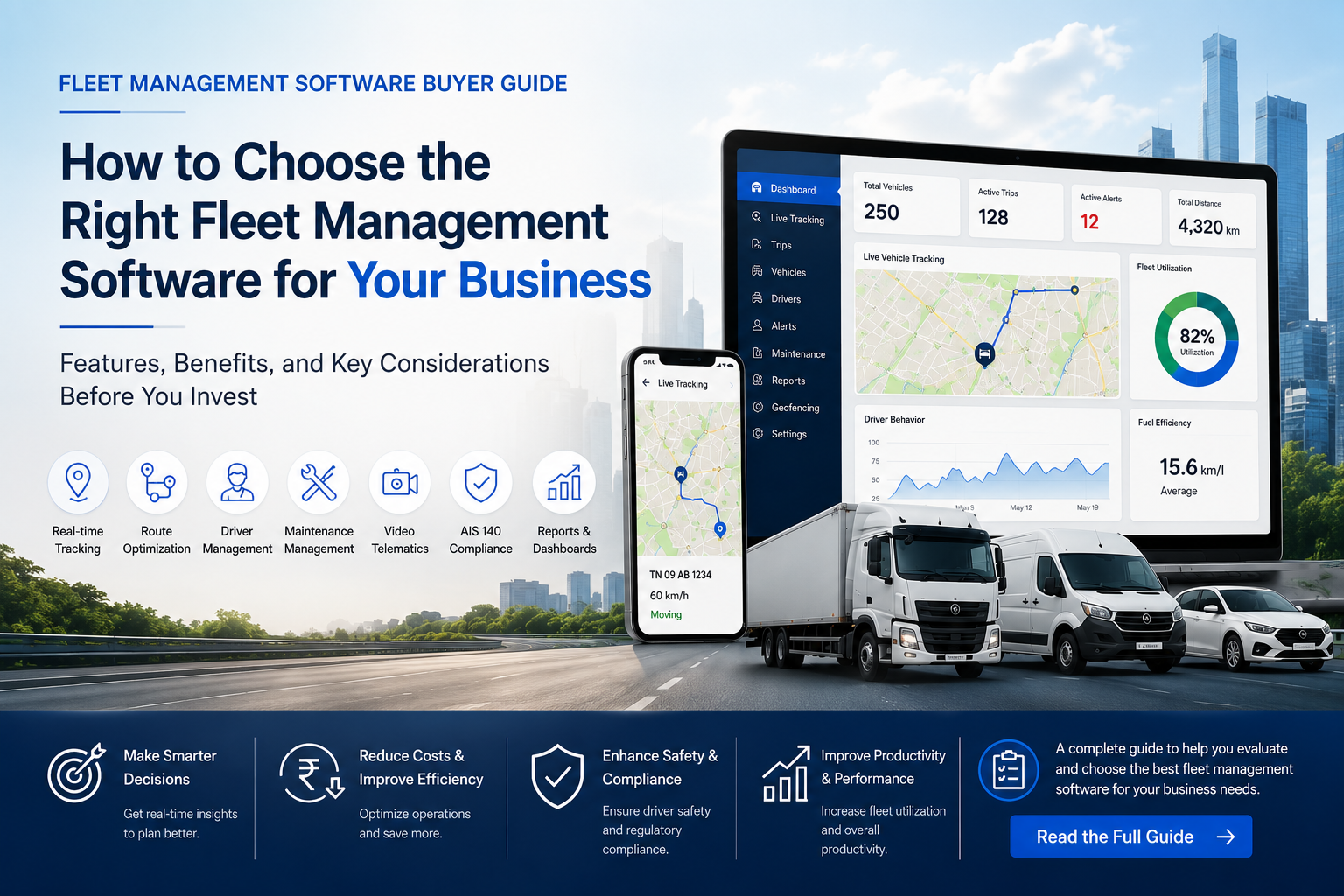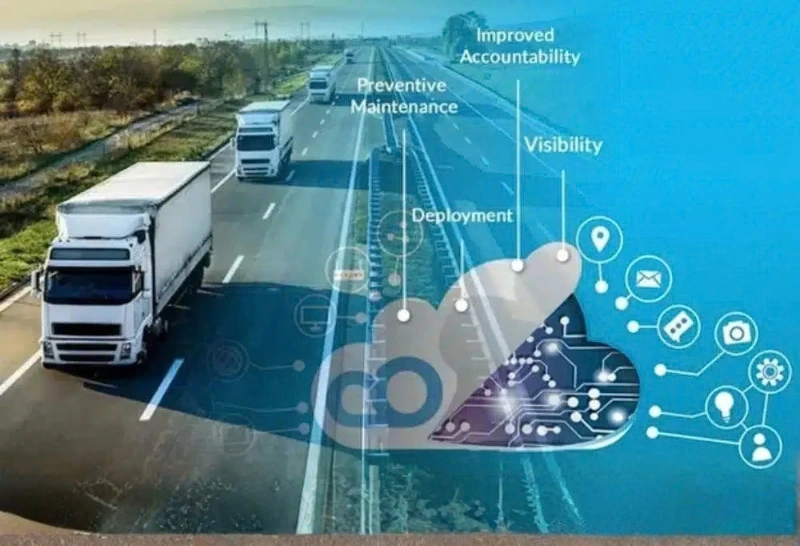
Why Real-Time Fleet Visibility Is Becoming a Strategic Asset for Operations Leaders

Real Time Fleet Visibility

By Leadership Team, Trinetra Wireless

There was a time when fleet visibility was treated as an operational convenience.

Today, it’s a strategic necessity.

In industries where margins are tight and execution is everything—logistics, construction, and school transportation—real-time fleet visibility is no longer just about knowing where vehicles are. It’s about controlling outcomes.

What Is Real-Time Fleet Visibility?

Real-time fleet visibility is the ability to monitor, analyze, and act on fleet data instantly using GPS tracking and telematics systems.

This includes:

  • Live vehicle location tracking
  • Driver behavior insights
  • Fuel and utilization analytics
  • Instant alerts and operational updates

Modern fleet visibility software transforms this data into actionable intelligence for operations leaders.

The Hidden Cost of Fleet Blind Spots

Most operational inefficiencies don’t come from major failures—they come from what you cannot see in real time.

Invisible Operational Gaps

Without a real-time vehicle tracking system, organizations miss:

  • Route deviations
  • Unauthorized stoppages
  • Excessive idle time
  • Delays in execution

These small inefficiencies compound into significant operational losses.

Delayed Responses

When teams rely on delayed reports instead of live fleet monitoring, decisions become reactive.

And in fleet-driven businesses, reaction time directly impacts cost and service quality.

Why Multi-Location Fleet Operations Require Live Fleet Monitoring

As fleets scale across cities and project sites, complexity increases rapidly.

Fragmented Visibility

Managing multiple depots without a centralized fleet monitoring system leads to:

  • Data silos
  • Inconsistent reporting
  • Limited control

Lack of Standardization

Without unified operational visibility, different locations operate at varying efficiency levels.

Real-time insights allow:

  • Performance benchmarking
  • Standardized operations
  • Centralized oversight

Weak Accountability

When visibility is limited:

  • Driver performance goes untracked
  • Delays lack ownership
  • Safety risks increase

Real-time tracking creates accountability across the entire fleet ecosystem.

From Tracking to Decision Intelligence

The real value of modern telematics solutions lies in enabling faster, smarter decisions.

Instant Operational Decisions

With real-time tracking insights, leaders can:

  • Reroute vehicles dynamically
  • Respond to disruptions instantly
  • Optimize fleet deployment in real time

Measurable Business Impact

Industry benchmarks indicate:

  • Up to 15% reduction in fuel costs through optimized routing
  • Up to 20% improvement in fleet productivity
  • Significant reduction in idle time and misuse

This is where fleet management software transitions from tool to strategic asset.

Optimized Fleet Utilization

Live data reveals:

  • Underutilized vehicles
  • Inefficient routes
  • Idle assets

This enables smarter, data-driven fleet optimization strategies.

Safety, Compliance, and Trust: The Visibility Advantage

Operational visibility is also a risk management layer.

Real-Time Driver Monitoring

With advanced fleet visibility software, organizations can detect:

  • Over speeding
  • Harsh braking
  • Unsafe driving patterns

Compliance Made Measurable

A digital fleet monitoring system ensures:

  • Accurate trip logs
  • Audit-ready reports
  • Regulatory compliance

Stakeholder Transparency

In school transportation and logistics:

  • Parents expect real-time updates
  • Customers demand delivery accuracy
  • Managers need operational clarity

Visibility builds trust, reliability, and accountability.

Integrating Fleet Visibility into Digital Operations

Forward-thinking organizations are embedding real-time fleet visibility into broader digital strategies.

Integration with Enterprise Systems

Fleet data feeds into:

  • ERP systems
  • Operations dashboards
  • Resource planning tools

Data-Driven Culture

Organizations shift toward:

  • Performance-based decision-making
  • Continuous optimization
  • Measurable KPIs

Scalable Intelligence

As businesses grow, integrated fleet visibility software ensures control scales alongside operations.

A Leadership Perspective: Visibility Alone Is Not Enough

At Trinetra Wireless, we’ve observed a clear pattern:

Organizations that succeed don’t just invest in visibility—they invest in intelligent visibility.

What differentiates modern platforms is not tracking—but:

  • AI-driven analytics for predictive insights
  • Driver behavior intelligence
  • Integrated dashboards across operations
  • Seamless API integrations with enterprise systems

This is where fleet visibility becomes fleet intelligence.

The Strategic Question for Operations Leaders

The conversation has evolved.

It’s no longer:

“Do we have a real-time vehicle tracking system?”

The real question is:

“Can we act on fleet data instantly to improve outcomes?”


Take the Next Step Toward Intelligent Fleet Visibility

If your organization is still operating with delayed data or fragmented systems, you’re operating with hidden risks.

👉 Request a demo with Trinetra Wireless to experience how AI-powered fleet visibility software can transform your operations.

FAQs

[sp_easyaccordion id=”4773″]

From Vehicle Tracking to Fleet Intelligence: The Next Evolution of Fleet Management

GPS fleet tracking system

For years, fleet management software has been largely defined by one capability: GPS fleet tracking.

But today, that definition is rapidly becoming obsolete.

Across industries—from school transportation to logistics and infrastructure—organizations are moving beyond basic GPS fleet tracking systems toward intelligent, data-driven fleet management platforms.

This shift marks the rise of what we call: fleet intelligence.

The Shift from GPS Fleet Tracking to Intelligent Fleet Management

Traditional telematics solutions solved the visibility problem. They told you where your vehicles are.

But modern operations demand more.

Fleet leaders today are asking:

  • Why is fuel consumption rising despite stable routes?
  • Which drivers are increasing operational risk?
  • How can we reduce unplanned downtime?
  • Where are inefficiencies costing us money daily?

These are not tracking questions—they are fleet intelligence questions.

Why Traditional Fleet Tracking Systems Are No Longer Enough

Basic GPS tracking systems for fleets provide data—but not insight.

Without context, data doesn’t drive decisions.

From Data to Decision Intelligence

Location data must evolve into actionable insights such as:

  • Idle time analysis
  • Route deviation alerts
  • Fuel consumption patterns

Connected Telematics Ecosystems

Modern fleet management systems integrate:

  • Driver behavior analytics
  • Fuel monitoring systems
  • Vehicle diagnostics
  • Route optimization tools

This creates a holistic operational view.

Real-Time Operational Control

In industries like logistics and school transport, delays and safety risks require instant response, not delayed reporting.

What Defines a Modern Fleet Intelligence Platform?

A true fleet management platform goes beyond monitoring—it enables predictive and strategic decision-making.

Unified Fleet Data Platform

Combining:

  • GPS fleet tracking
  • Driver analytics
  • Fuel data
  • Trip intelligence

into a single dashboard improves operational clarity.

Predictive Fleet Management

According to industry benchmarks:

  • Predictive maintenance can reduce fleet downtime by up to 30%
  • Telematics-driven optimization can cut fuel costs by 10–15%

This is the power of data-driven fleet management.

Continuous Optimization

Organizations can:

  • Improve vehicle utilization
  • Reduce idle time
  • Benchmark driver performance
  • Optimize routes dynamically

Fleet management becomes an ongoing optimization engine, not just a monitoring tool.

Real-Time Fleet Visibility as a Competitive Advantage

In today’s environment, real-time fleet tracking is not just operational—it’s strategic.

  • In school transport, it builds parent trust through transparency
  • In logistics, it ensures delivery reliability
  • In construction, it improves asset utilization across job sites

Organizations using advanced telematics solutions gain:

  • Faster decisions
  • Lower operational risk
  • Improved stakeholder confidence

From Control to Confidence: The Leadership Advantage

The biggest transformation we see with advanced fleet management software is not just operational—it’s cultural.

When leaders have access to reliable data:

  • Decision-making becomes faster and more accurate
  • Dependency on manual supervision reduces
  • Teams operate with higher accountability

This shift creates confidence at every level of the organization.

How Forward-Thinking Organizations Are Adopting Fleet Intelligence

Across India and Asia-Pacific, adoption of fleet tracking systems and telematics solutions is accelerating.

Forward-looking companies are:

  • Replacing legacy GPS tracking tools with integrated platforms
  • Leveraging AI for predictive insights
  • Using data to drive cost optimization and safety improvements

At Trinetra Wireless, we are seeing this shift first-hand across:

  • School transportation fleets
  • Logistics operations
  • Construction and infrastructure companies

Organizations are no longer asking “Where are my vehicles?”
They are asking “How efficiently is my fleet performing?”

The Road Ahead: Intelligent, Connected, Predictive Fleets

Fleet management is evolving into a data-driven, AI-powered discipline.

The future will be defined by:

  • Connected fleet ecosystems (IoT-enabled vehicles)
  • Predictive maintenance and automation
  • Intelligent driver behavior analytics
  • Real-time operational intelligence

The question is no longer:

“Do you have a GPS fleet tracking system?”

The real question is:

“Is your fleet intelligent enough to drive business outcomes?”

Take the Next Step Toward Fleet Intelligence

If your organization is still relying on basic fleet tracking systems, now is the time to evolve.

Explore how modern fleet management software and telematics solutions can transform your operations.

👉 Request a demo with Trinetra Wireless to see how fleet intelligence can reduce costs, improve safety, and enhance operational control.

FAQ

[sp_easyaccordion id=”4771″]

Top 7 KPIs Every Fleet Manager Should Track

Top 7 KPIs Every Fleet Manager Should Track

Effective fleet management is crucial for improving operational efficiency and reducing costs. One of the best ways to ensure optimal fleet performance is by tracking key performance indicators (KPIs). Here are the top 7 KPIs every fleet manager should monitor:

Fleet Utilization Rate:

This KPI helps assess how efficiently the fleet is being used. A high utilization rate indicates that vehicles are on the road for productive purposes, whereas low utilization may suggest underused assets, leading to wasted costs.

Fuel Efficiency:

Fuel is one of the largest ongoing expenses for fleet operators. Tracking fuel consumption per vehicle can help identify inefficiencies, including excessive idling or improper driving habits, enabling you to reduce fuel costs.

Vehicle Downtime:

The amount of time vehicles are out of service due to maintenance or breakdowns directly impacts fleet productivity. Minimizing downtime ensures that your fleet remains operational and serviceable.

Maintenance Costs:

Regular maintenance is essential to avoid costly repairs. Tracking maintenance costs helps manage expenses and plan for future investments in vehicle upkeep.

Driver Behavior:

Monitoring driver behavior, such as speed, braking, and acceleration, can improve safety, reduce fuel consumption, and decrease the likelihood of accidents. GPS tracking systems play a critical role in gathering this data.

On-Time Deliveries:

Timely deliveries reflect efficient route planning and driver performance. Monitoring on-time deliveries helps measure customer satisfaction and pinpoint operational bottlenecks.

Vehicle Lifecycle:

Understanding the age and condition of each vehicle in your fleet helps plan for replacements and upgrades, ensuring your fleet remains reliable and cost-efficient.

By tracking these KPIs, fleet managers can improve performance, reduce costs, and boost service quality. Want to optimize your fleet? Discover how Trinetra Wireless’s fleet management software and GPS tracking system can help monitor KPIs in real time. Contact us today!

How AI Enhances Fleet Driver Safety

AI fleet safety solutions

AI is transforming fleet safety management by predicting, monitoring, and responding effectively to potential risks:

  • Predictive Maintenance: Real-time analysis of vehicle data predicts mechanical issues, reducing unexpected breakdowns.
  • Driver Behavior Monitoring: Continuous monitoring of driving habits provides real-time feedback, promoting safer practices and minimizing accidents.
  • Route Optimization: AI suggests optimal routes based on current traffic and weather conditions, enhancing safety and operational efficiency.
  • Real-Time Alerts & Emergency Response: GPS tracking systems promptly notify managers of route deviations and emergencies, ensuring swift assistance.
  • Fatigue Detection: AI detects signs of driver fatigue and alerts drivers to take breaks, reducing the risk of tiredness-related accidents.
  • Enhanced Driver Training: Customized training programs based on performance data help drivers improve their skills and maintain safety standards.
  • Compliance Monitoring: Monitoring factors like service hours ensure compliance with safety regulations, minimizing risks.

Implementing these AI-powered solutions into fleet management enhances safety, efficiency and compliance, providing a competitive edge in the industry.

By leveraging AI, Trinetra Wireless supports your fleet in achieving:

  • Reduced accident rates and associated costs
  • Improved driver behavior and performance
  • Enhanced driver well-being and morale
  • Increased operational efficiency

AI isn’t a substitute for responsible driving, but it empowers drivers and prioritizes safety. Trinetra Wireless is committed to guiding your fleet towards a safer and more efficient future.

Enhancing Fleet Operations with Video Telematics

Telematics Fleet Management

In the realm of fleet management, vehicle-mounted cameras have undergone a significant transformation, evolving from basic devices into indispensable tools. Now, a game-changing solution called video telematics is gaining prominence. This innovative technology combines cameras, analytics, and fleet tracking, to deliver a host of benefits that surpass a traditional dashboard camera.

A vital component of video telematics is the telematics camera, which serves as the hardware for this powerful solution. It is essential to select a compact, high-resolution camera with ample storage capacity and additional features like GPS for location tracking, Wi-Fi connectivity and data transmission capabilities.

The functioning of video telematics revolves around merging vehicle data and driving data to provide comprehensive context for captured incidents. The video evidence is transmitted in real-time over cellular networks, empowering fleet managers with up-to-date information.

Multiple camera options are available, including road-facing, road and driver-facing, and multi-camera setups for comprehensive coverage. Video telematics extends beyond incident management, offering potential cost savings, improved fuel efficiency, increased productivity, and most importantly, enhanced driver safety.

Video Telematics adds the Power of Sight and Insight

Integrating into fleet management solutions provides a holistic approach to fleet operations. By combining real-time video footage and telematics data, managers gain valuable insights into driver behavior, vehicle performance, and incident management. This comprehensive solution enables proactive decision-making and ensures a safer and more efficient fleet.

Perfect Integration of Video Telematics and Fleet Management

Video telematics seamlessly integrates with Fleet management systems, enhancing their capabilities. By leveraging the power of video analytics, fleet managers can monitor driver behavior, identify risks, and implement targeted training programs. This integration allows for better driver management, improved maintenance schedules, and optimized operational efficiency.

Video Telematics for Safety of Truck Fleets

It is crucial for truck fleets, where safety is of utmost importance. With real-time video monitoring, fleet managers can proactively address dangerous driving behaviors such as speeding, harsh braking, or distracted driving. This technology promotes safer driving practices, reduces accidents, and ultimately saves lives.

Fleet Management Software is streamlining operations in India

In India, the demand for efficient Fleet management solutions is on the rise.  It plays a significant role in streamlining operations by providing real-time tracking, route optimization, and vehicle diagnostics. This software empowers fleet managers to make informed decisions, minimize downtime, and maximize productivity.

Enhancing Visibility and Control of Fleet Tracking System

A robust fleet tracking system powered by video telematics offers real-time location tracking, geo-fencing, and remote monitoring capabilities. This increased visibility and control enables fleet managers to respond promptly to incidents, optimize routes, and ensure compliance with regulatory standards.

IoT-Based Fleet Management and Telematics

The Internet of Things (IoT) revolutionizes Fleet tracking system by connecting vehicles, mounted cameras, and other devices. With IoT-based video telematics solutions, fleet managers can access data remotely, monitor driver performance and receive instant alerts for critical events. This connectivity empowers proactive decision-making and drives operational excellence.

Direct Benefits of Video Telematics

Let us delve into the advantages of video telematics.

  • Capturing crucial collision evidence: Highlighting the ability to gather high-quality video footage for accidents, aiding in determining liability and expediting insurance claims.
  • Proactive driver risk management: Video telematics enables the identification and correction of risky driving behaviors through video data analysis, targeted coaching, and training programs.
  • Real-time Monitoring: Real-time monitoring of fleet activities, enhancing security and deterring theft or vandalism.
  • Automated Alert Systems: Leverage video analytics to receive automated alerts for suspicious incidents, allowing for immediate intervention.
  • Streamlined Operations: Gain valuable insights into fleet operations through video telematics, enabling better resource allocation and route optimization.
  • Increased Productivity: Identify inefficiencies, streamline workflows, and improve overall fleet performance for enhanced productivity.

Trusted fleet management software, such as the one offered by Trinetra Wireless, simplifies access to video telematics data, streamlining analysis and enhancing decision-making process. By adopting video telematics, organizations can improve driver safety, reduce costs and achieve greater efficiency in fleet management.

To experience the power of video telematics in your fleet management system, contact us. Explore how our comprehensive video telematics solution can revolutionize your fleet operations and unlock new levels of success.

IoT-Based Fleet Management and Telematics

IoT-Based Fleet Management and Telematics

Digital fleet management software gives Fleet Mangers better control over vehicles and drivers with GPS support, mobile app integration, dash-cam inputs and data in real-time and IoT applications over a live network.

As fibre-optic and wireless networks are being deployed all over the world, connectivityhas become easily accessible.So, software and mobile applications are being put into use increasingly and easily accepted in many fields, across countries. Fleet managementis no exception and here IoT has come to play a big role today. In fact,IoT solutions have a range of benefits to deliver to its patrons. For fleets, this technology works as an interesting tool to optimise fleet operations and performance.

Internet of Things to be A Game Changer

The benefit of IOT (Internet of things) is that itconnects all those devices or objects or ‘things’ electronically embedded with the capacity of exchanging data, over the internet. Over the years IoT has seen rapid growth all over the world with a proliferation of connected devices and equipment especially over wireless networks.The fleet operators and transporters too have got their share with this digital transformation rolling out over all industries and businesses.

What does IoT with FMS software do for fleets?

  • It can streamline operations and last mile delivery
  • Helps to trigger automated messages and alerts
  • It can track vehicle, parameters, driver behaviour and generate bespoke Reports
  • It can save on maintenance costs and downtime
  • Helps maximise fuel efficiency and vehicle performance
  • Applications are made right for the Real-World

A Bright Future for FMS

Fleet Management Software (FMS) are now getting armed with powerful digital tools like ML, AI, data analytics software and IoT. FMS is nowadays becoming more compatible with IoT applications, like the one offered by Trinetra Wireless,who is a solution provider with expertise and experience. Real-time location based FMS solutions like these are empowered with GPS tech, and can provide great visibility for fleet managers across geographies, via cellular networks, with wireless sensors, Dash-camwith a useful dashboard in the control centre to track asset, fleet trips, and inventory.

Remote monitoring and easily enabled on computers tabs, phones or portable devices all end users enjoy a seamless experience.The remote tracking tool was useful during the pandemic and the new normal, thereafter to improve efficiency and productivity.

Fleet Management Systems that are IoT enabled have truly great possibility of deployment in the days ahead. IoT and related technologies have evolved quickly over the past. Moving ahead will be near impossible if you ignore IoT technology, as the possibilities of application multiplyeverywhere. There’s a paradigm shift towards smart technologies especially in legacy systems, trades and markets. Once 5G get rolled out, the possibilities seem endless, and fleet and transport management is no exception.

To Conclude

The FMS software, that Trinetra Wireless offers, can be integrated with many othersystems you use in your fleet business. By means of telematics technology and Data Analytics, our FMS softwarecananalyse a big cache ofdatato make it more relevant, valuable andinsightful toempower fleet managers. Decide on the right FMS software that is scalable to effectively handle operational inefficiencies, identify non-compliance and other discrepancies easily. Address issues effectively and quickly by strategic decision-making and gain higher levels of efficiency with the FMS software.

Our team can arrange for a ‘Demo to any interested person or manager toappraise our FMS software. So, contact our executive teamas soon as possible.
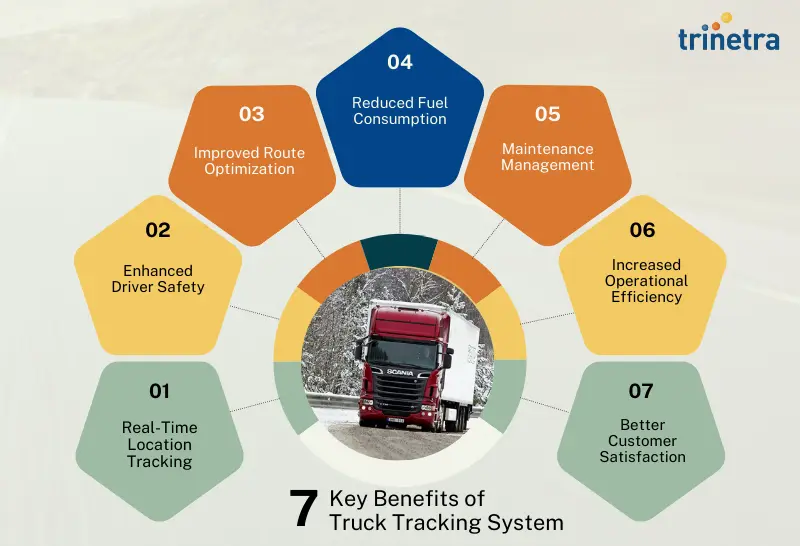
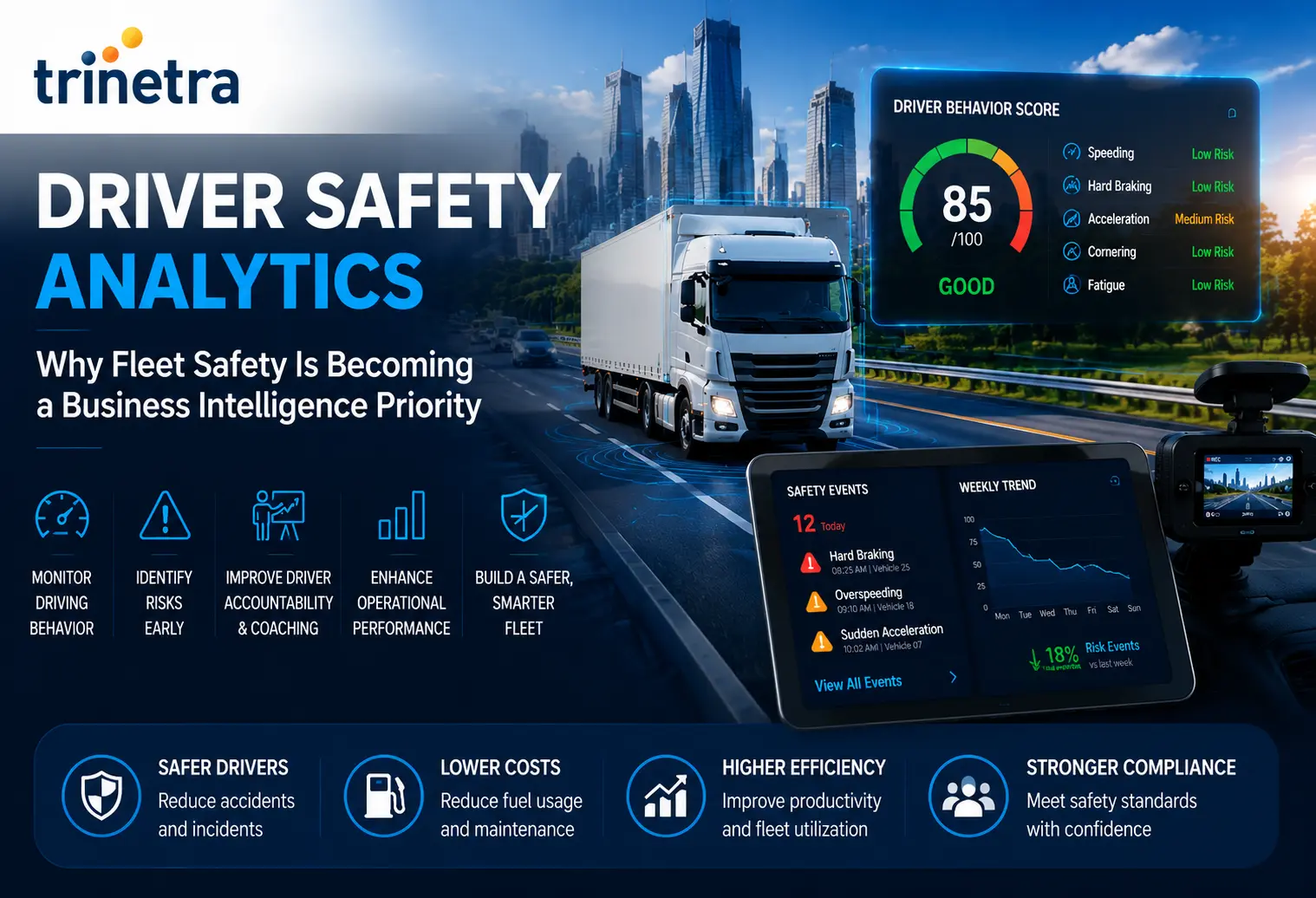
AI-Driven Fleet Management Solutions: Revolutionizing Efficiency & Safety

AI based Fleet Management Solution

A study by Fortune Business Insights predicts substantial growth in the global fleet management software market, from $23.67 billion in 2023 to $79.82 billion by 2030, with a Compound Annual Growth Rate (CAGR) of 19%. (Source – Fortune Business Insights).

Fleet management is no longer just about spreadsheets and gut feelings. Now, with the power of AI, businesses are getting smarter about their transportation maneuvers. By crunching real-time data via advanced algorithms, AI is assisting to reorganize everything from routes to repairs, making the entire system run efficient and faster.

Use Cases:

Imagine having a super-powered mechanic and navigator on your team, constantly working to keep your fleet running smoothly. That’s what AI is bringing to fleet management! By investigating vehicle data, AI can forecast probable problems before they even happen, preventing expensive breakdowns and delays.  On the road, AI acts like a smart navigator, frequently checking traffic and weather conditions to find the most efficient directions for your drivers. This saves time, fuel and keeps your deliveries on schedule, no matter what the road throws your way.

Industries Benefitting:

AI in fleet management helps numerous industries, including Construction, Transportation & Logistics, Rental & Leasing, Healthcare, Travel, Manufacturing and E-commerce.

Advantages:

AI is changing operational efficiency by unlocking noteworthy improvements in fuel utilization and asset management. This translates to evident benefits like cost reduction, environmental impact mitigation, and a more streamlined workflow. It offers analytics that offer insights into driver behavior, improve safety and compliance, and improve customer satisfaction via timely deliveries and proactive service updates.

Key Benefits:
  • Improved driver and vehicle safety
  • Real-time vehicle tracking
  • Optimized vehicle routing
  • Enhanced dispatching efficiency
  • Reduced vehicle maintenance costs
  • Increased productivity
Technologies:

Advanced AI powered by machine learning, deep learning and predictive analytics endows data-driven decision making.  These refined algorithms constantly study and adapt to real-time data streams from IoT sensors inserted within vehicles. This complete data capture, incorporating both vehicle performance and environmental factors, provides vital insights that optimize operations and drive strategic decision making.

Implementation:

Streamlined AI integration leverages existing systems and IoT infrastructure, creating a seamless data pipeline. Fleet managers acquire real-time insights from bespoke dashboards and strong forecasting tools. These data-driven capabilities enable proactive optimization strategies, ultimately driving fleet efficiency and propelling business growth.

Ready to transform your fleet operations with AI? Future-Proof Your Business with AI-powered Fleet Management.

Eight ways that make the fleet management system work smarter for you.

There are smart ways to make your fleet management more effective to meet the unique requirements of your fleet of Vehicles or truck fleets. They are now easier to manage thanks to advancement in technology and IT, greatly improving a number of areas to benefit fleet owners or operators. Find here the 8 ways fleet management software can help make your fleet business more profitable and productive.

Telematics enable real-time connectivity

Fitting the vehicle or truck with the GPS tracking hardware and activating the device and software is all what you need to do to get instant fleet management. The FMS software will take care of all the requirements of the fleet managers and operators via telematics.

Vehicle specific routes mapped

The software provides navigational module for the drivers to safely move them from destination so the next and so on. GPS vehicle tracking offers number of significant advantages to keep drivers efficient safe and stress-free. A capable vehicle navigation and routing module is one of the most effective safety measures for drivers.

Truck/Vehicle specific routing is based on the vehicle size and load

Realistic maps help prepare drivers to make their journey efficiently and economically. Updates and notifications help drivers respond to route changes or detours. The rout is charted based on the size of the vehicle and the type of load it is carrying. Help drivers by providing more info such as weight limits, low bridge clearance, entry and exit points, rest stops or parking areas, etc. to get their way to each destination up to the last mile.

Maximize uptime with preventive maintenance

Maintenance managers are provided with a wealth of information and diagnostic data too on the health of vehicles. Compared with the OEM data provided by vehicle manufacturers maintenance managers currently get far more accurate evaluation of how the vehicles are performing as well as enable them to plan upcoming maintenance and their schedules. Service centres also get advanced notice of the schedules to be prepared. This data also helps the company plan vehicle life cycle and help develop best practice guidelines.

GPS tracking to monitor movement, location & door-open events

Robust hardware installed in vehicles or trucks monitor in real-time 24 x 7 the movements and location. It can also monitor the ‘door opening and closing’ events for reasons of safety and security. Geofencing can be set up by the software to monitor vehicle movements and also to automatically notify managers, such as when a vehicle enters or leaves a location or site.

Automatic POD and fast turnaround by GPS on Geofences

Using GPS enabled tracking the FMS lets you detect the location of a vehicle, or driver, or mobile asset, when entering or exiting the’ geofenced’ area which has added value to the system. it can be used to confirm automatically the Proof of Delivery (POD) and electronically tagged as a completed task. It can also trigger other functions like billing, despatch scheduling and others and cuts down paperwork completely.

Communication Channel & Web Access

The software help you set up interactive communication channel and data streams with fleet managers, drivers, backend staff, facilitating alerts & notifications, messages, feedback forms, complaints registry, monitoring parameters, etc. The FMS software is web hosted and mobile app integrated for easy data transfer in real-time and always accessible via a compatible communication channel.

BYOD Option

A BYOD (Bring Your Own Device) option can help reduce costs of managing fleets, as drivers can use their own device, a smartphone or tablet, with an app on either iOS or Android platform to be connected with the Headquarters. Integration with GPS tracking and mobile app installation, the system can facilitate navigation, cover compliance and driver behaviour and help in work order management, which all improves the work experience.

Trinetra’s Fleet Management Software uses a telematics to constantly monitor parameters and track vehicles or mobile assets across territories. It works in real time on a web-based platform built for easy and remote access by all stakeholders. With a customised mobile app, to helps run and streamline fleet operations economically ensuring a better ROI.

Simply request for a Demo and our team will return as to you as soon as possible.

Smart Electric Vehicle Fleet Management Software

Smart Electric Fleet Management System

Governments, organizations and scientists all over the world have agreed upon the impact of climate change and the need to take serious action. As we witness increasing dangerous weather events, rising water levels, record rise in global temperatures, the need of the hour is for joint climate action. Therefore, the perspectives of fleet operators are beginning to change. They have relied on the ICE powered vehicles as their principle source of hauling power for a century. Now fleet operators and transporters are looking at the impact on the environment by these vehicles, but realize also that being green can also be profitable.

Cost effective Electric Vehicle deployment is leading the change.

Over the last few decades, the transportation industry has been working to reduce the environmental impact of its vehicles, particularly with battery powered EVs which are becoming cost-effective over the years. The stage is set for EV fleets owing to governmental emission mandates, public demand for zero-emission tech and funding initiatives. Many fleet operators are preferring to electrify their fleets for more than just meeting emission norms. They have made their own sustainability goals guided by social responsibility and/or financial incentives. The electric vehicle typically has a lower total cost of ownership owing to the lower cost of electricity and reduced maintenance costs. With the help of EV Fleet Management software, fleet operators can easily manage their electric vehicle fleets, monitor the health and performance of their EVs and optimize their operations for better efficiency and profitability.

Optimizing operations with telematics

Having incorporated EVs into your fleet. The way to unlock benefits is to view and review the data from telematics enabled software (FMS application). Fleet managers get data driven insight to help them optimise routes, vehicle utilisation and ensure the most miles covered between charges. Maximise the efficiency of your fleet with similar techniques for your battery powered EVs. Use the same software, like the one supplied and customised by Trinetra, to manage both electric and ICE powered vehicles. Using the same platform, you can streamline the entire process. Establish best practices for driving habits and charging, to improve range in miles and the battery health.

Build sustainable fleets

Clean fuel technology is being used to bring in the state of sustainability. For your fleet vehicles duty cycles currently EVs have better range capacity and lower operational cost over the service life time. Electric vehicles in market are now offered in new classes, such as medium duty, pick-ups, etc. So, equipped with the relevant data and tools, fleet managers will be able to pick the right vehicle for the right job and seamlessly integrate them with the rest of the fleet.

Telematics play a key role in fleet management to control fuel and energy consumption for all types of vehicles and EVs too. Benefits of fuel efficiency and reduction improves operations, safety and maintenance. Trinetra Wireless’ GPS enabled platform integrates telematics devices to retrieve data from vehicles in a large scale and monitor all aspects of the vehicles.  This helps decision making and to develop a good sustainability strategy. As the transportation sector grows it also leaves a carbon footprint. Therefore, fleet owners should take steps now to adopt sustainable alternatives which can save money in the long run and keep them ahead of the sustainability movement.

Conclusion.

Trinetra Wireless offers a customisable fleet management software using telematics technology & Data Analytics. It can be integrated with other systems used in your fleet business and can generate, process and analyse the data, to turn it into valuable and insightful information to fleet managers. The right FMS software will effectively address inefficiencies and identify non-compliance and other discrepancies quickly to enable strategic decision making and corrective action for problem solving and improving your ROI.

We shall arrange a ‘Demo for interested persons to evaluate our FMS software at their convenience. Just contact our BD team to kick-off a useful partnership.

7 Tips to Improve Your Fleet Management Processes

Tips to Improve Your Fleet Management Processes

Effective fleet management is essential for ensuring smooth operations, reducing costs, and maximizing efficiency. Here are some practical tips to enhance your fleet management processes:

Leverage Advanced GPS Tracking:

Utilize GPS vehicle tracking systems to monitor real-time locations, optimize routes, and ensure timely deliveries. By reducing idle times and accelerating overall fleet productivity, this technology helps save fuel.

Implement Preventive Maintenance:

Schedule regular maintenance checks to prevent unexpected breakdowns. By extending the lifespan of your vehicle and decreasing repair expenses, preventive maintenance initiatives ensure safety.

Use Fleet Management Software:

Invest in comprehensive fleet management software to streamline operations. This software can help in tracking vehicle performance, managing maintenance schedules, monitoring driver behavior, and generating insightful reports for better decision-making.

Monitor Driver Performance:

Keep a close eye on driver performance to enhance safety and efficiency. Implementing driver performance monitoring tools can help in identifying risky behaviors, promoting safe driving practices, and providing necessary training and feedback.

Optimize Route Planning:

Efficient route planning is crucial for reducing fuel costs and improving delivery times. Use route optimization tools to find the most efficient routes, and take into account traffic conditions, delivery schedules, and vehicle capabilities.

Enhance Communication:

Maintain clear and consistent communication with your drivers. Use mobile apps and communication tools to provide real-time updates, address issues promptly, and ensure smooth coordination between drivers and fleet managers.

Analyze Data for Continuous Improvement:

Regularly analyze data collected from your fleet management system to identify trends, measure performance, and implement improvements. Data-driven decisions can help in optimizing fleet operations and achieving long-term success.

By incorporating these tips into your fleet management strategy, you can improve efficiency, reduce costs, and ensure the smooth operation of your fleet. Investing in advanced technology and prioritizing preventive measures are key to effective fleet management.

Ready to optimize your fleet management with advanced fleet management software? Get in touch with us right away to figure out how your company could benefit from our pioneering fleet management and GPS tracking services. Take the next step towards maximizing your fleet’s potential.

Enquire for

Free Consultation

    Name

    Mobile

    E-mail

    Company

    Designation

    City/Country

    Message